- End-of-life preparation
- Faith, Culture & Traditions
When a Priest Dies During Mass: What Happens Next?
Father Sánchez went to church that Saturday evening to celebrate Mass and share a message with his congregation. He could not have known that the celebration would end in the tragedy of his own death, or that his reflections on death would reach so many people under such heartbreaking circumstances.

Eric Ndubi
6 min read
Father Sánchez went to church that Saturday evening to celebrate Mass and share a message with his congregation. He could not have known that the celebration would end in the tragedy of his own death, or that his reflections on death would reach so many people under such heartbreaking circumstances.
Death is the great equalizer, a certainty that knocks on every door without warning or negotiation. It respects neither time nor place, nor even the sacredness of the moment. We often compartmentalise the end of life as a distant, abstract event, yet it can arrive in a single heartbeat.
This fragile reality was brought into sharp, tragic focus recently during a routine church service, proving in the most heartbreaking way possible that death can come at any time - even at the altar in the middle of a Catholic Mass, moments after the priest literally reminds the congregation of this very fact.
Tragedy at the Altar
On October 17, 2026, the congregation at Our Lady of Perpetual Help Parish (Nuestra Señora del Perpetuo Socorro) in Guayaquil, Ecuador, gathered for what began as a routine evening Mass. The service was being livestreamed on social media to faithful followers at home.
The parish priest, 53-year-old Father Patricio Alfredo Sánchez Molinari, stood at the pulpit to deliver his homily. In a profound twist of irony and fate, Father Sánchez began preaching to his parishioners about the fleeting nature of earthly existence, noting how suddenly life can be cut short.
"One day, all of us here will also die, and sometimes the time we have spent on certain things does not hold as much meaning as the time we have spent with God," he is famously quoted to have said in a widely circulated translation from Spanish.
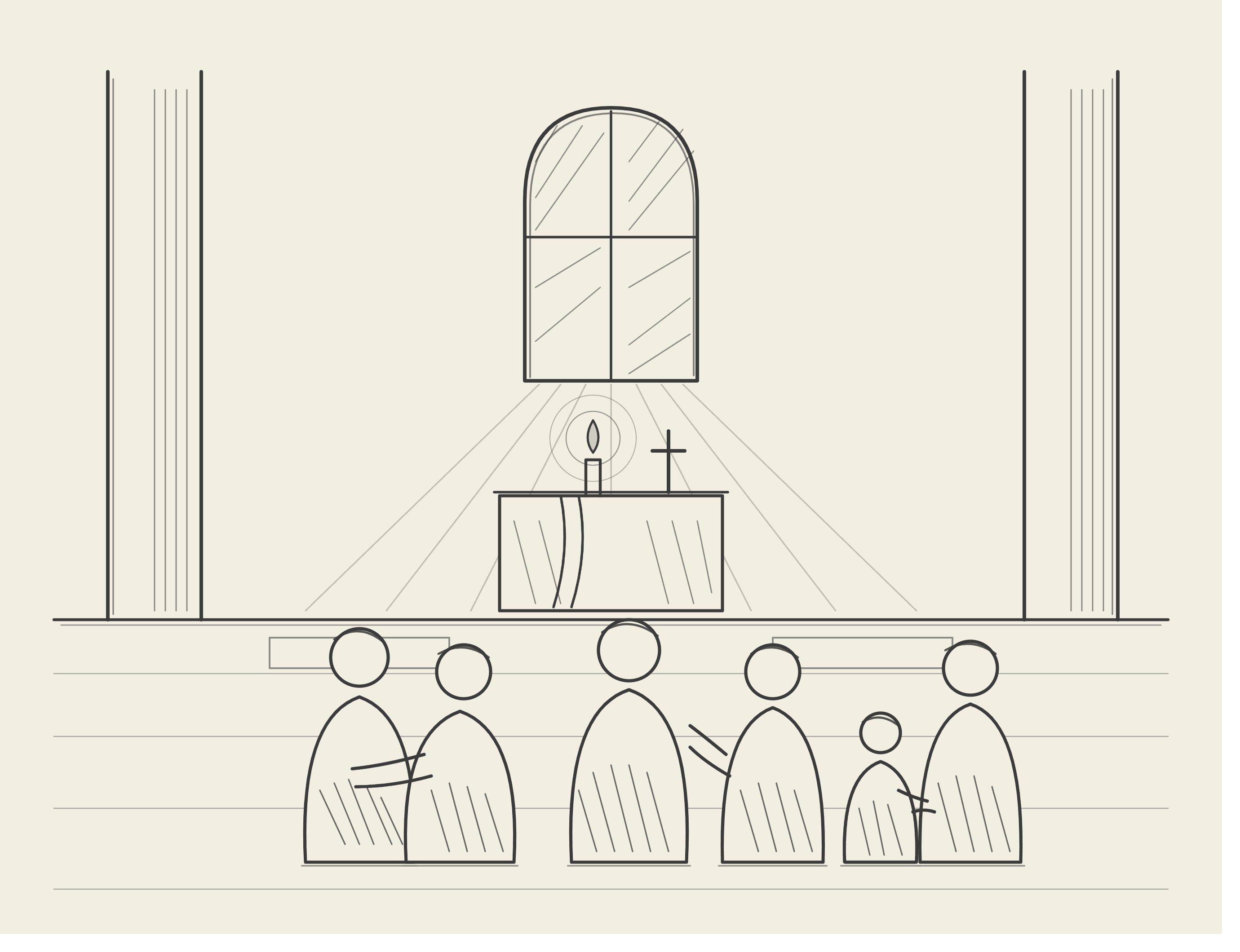
Minutes after finishing his sermon, as he stood near the altar, a massive, heavy wooden crucifix detached from the sanctuary wall. The crucifix fell forward without warning, striking Father Sánchez directly on the head and back.
Screams of horror echoed through the church as altar servers and worshippers rushed to the altar to lift the heavy structure and call for help. The livestream was abruptly cut. Emergency responders arrived quickly, but Father Sánchez tragically succumbed to his injuries later that day.
He had just the day before, on October 16, celebrated his 21st anniversary of priestly ordination.
What Happens if a Priest Collapses or Dies During Mass?
The answer depends on what has happened, which part of the Mass is underway, and whether another priest is available to assist. The immediate priority, of course, is to get medical help for the priest. The liturgical question comes after that.
For Catholics, the Mass is a single, unbroken act of worship, not just a series of prayers. For centuries the Church has had guidance for exactly this situation, set out in a document called De Defectibus (“Concerning Defects”).
It calls to mind another undeniable fact, that inasmuch as death comes announced, life - for the living - continues the very next second, uninterrupted.
Scenario 1: Before the Consecration
If a priest collapses or passes away before the consecration begins (during the Introductory Rites, Liturgy of the Word, or the Homily), the Mass is immediately discontinued and ends.
From a theological standpoint, the Eucharistic Sacrifice has not yet taken place. Because the bread and wine have not been consecrated, there is no sacred "sacrament in progress" that requires completion or protection.
The emergency takes full precedence, and another priest cannot simply step in to "pick up" where the first left off - unless circumstances permit. The focus shifts entirely to emergency care and prayer.
Scenario 2. After the Consecration
If the priest suffers a medical emergency or passes away after the consecration has begun (even if he has only consecrated the bread but not yet the wine), the protocol changes entirely. The Mass must be completed by another priest.
The Catholic Church teaches that once the words of consecration are spoken, Christ is truly present in the Eucharist. Leaving the sacrifice incomplete or leaving the consecrated species unattended on the altar is considered a grave irreverence.
If another priest is in the building or can arrive quickly, he must step in, skip the introductory parts, and resume the Mass from the exact point of the Eucharistic Prayer to complete the sacrifice and consume the elements.
If absolutely no other priest is available, a deacon or authorised extraordinary minister must step forward to reverently place the consecrated species into the tabernacle to protect them.
So, What Happened in Father Sánchez's Case?
The Mass came to an immediate and permanent halt. Because the heavy crucifix struck the priest just after his homily, the liturgy had not yet entered the Liturgy of the Eucharist.
No consecration had taken place. There were no consecrated elements on the altar requiring theological completion. Consequently, the liturgy was instantly abandoned so that panicked parishioners, church staff, and paramedics could focus entirely on trying to save the priest's life.
The Unpredictability of Death: Lessons from Father Sánchez’s Last Homily
The Unpredictability of Death: Lessons from Father Sánchez's Last Homily
Father Sánchez went to church that Saturday evening to celebrate Mass and share a message with his congregation. He could not have known that the celebration would end in tragedy, or that his reflections on death would reach so many people under such heartbreaking circumstances.
It is tempting to interpret such a rare moment as a premonition. I think, however, that there is a more useful way to approach it. Father Sánchez was speaking about the reality of death, something we know intellectually but often struggle to live with practically.
We know that life is temporary. We know that the people we love will not be with us forever. Yet we often live as though there will always be more time.
"The quality time we give to God, to our brothers and sisters, to our husbands, wives, children, and family — that time is the best spent," a translation from Spanish quotes an excerpt from his homily.
You don’t have to be religious to take something from that. Here is what I’m taking from it:
Make time for your people: Do not allow every conversation with family and friends to become something you will do when work is less demanding.
Be present: Sometimes, what people need from us is not money, advice or a solution. They simply need our attention.
Keep life in perspective: Ambition matters, but it should not leave us with no time to enjoy the life we are working so hard to build.
Say the thing now: Call the person, write the letter, make the apology. “Someday” isn’t guaranteed.
Audit your hours, not just your calendar: If your busiest days leave no room for the people you love, that’s worth revising.
Have the uncomfortable conversations: Where documents live, what your wishes are, who should be contacted. We can make difficult times less burdensome for those we leave behind.
Let your community carry you: After Father Sánchez died, people gathered, prayed and shared memories. Grief was never meant to be handled alone, and the practical burdens, like funeral costs, are easier when others help carry them.
If your family or someone you love is facing an unexpected loss, you don’t have to figure out the practical side alone. Withpema provides you with the tools, information and access to make fundraising, planning and memorialising easy and straightforward.
May Father Sánchez rest in peace, and may his last words push us to spend our time on what we’d regret leaving undone.